

Global telecommunications operators are dismantling legacy monolithic billing stacks at an accelerated pace as 5G standalone (SA) networks, enterprise network slicing, and multi-partner IoT ecosystems render batch-based invoicing obsolete. Choosing the right telecom billing software has shifted from a back-office IT procurement decision to a primary determinant of carrier operating margins and time-to-market.
According to industry estimates from Mordor Intelligence and Fortune Business Insights, the global telecom billing and revenue management market is valued between $22.54 billion and $24.43 billion in 2026, with North America accounting for roughly 32% to 35% of total expenditure. While on-premises deployments still represent over 60% of installed Tier-1 infrastructure due to data sovereignty rules, cloud-native Business Support Systems (BSS) are expanding at a 13.12% compound annual growth rate (CAGR) through 2031.
Market Forces Reshaping Telecom Billing Software in 2026

Three structural shifts are forcing communications service providers (CSPs) and Mobile Virtual Network Operators (MVNOs) to modernize their monetization engines:
- Real-Time Convergent Charging: Legacy platforms separated prepaid real-time rating from postpaid monthly billing. Modern architectures unify both workflows into a single Online Charging System (OCS) capable of rating gigabytes, low-latency API calls, and dynamic enterprise SLAs simultaneously.
- Vendor Consolidation and Capital Realignment: The supplier landscape experienced major structural consolidation in May 2026 when NEC Corporation closed its acquisition of CSG Systems, placing subsidiary Netcracker in charge of combined BSS operations and integration. Simultaneously, private equity buyouts—such as CVC Capital Partners taking Comarch private—have shifted vendor roadmaps toward higher-margin recurring SaaS contracts.
- TM Forum Open API Compliance: Tier-1 operators increasingly reject proprietary vendor lock-in. Procurement RFPs now mandate conformance with TM Forum Open Digital Architecture (ODA) standards so billing modules can plug into existing CRM, order orchestration, and enterprise software ecosystems without multi-year custom integration cycles.
Leading Telecom Billing Software Companies: 2026 Executive Comparison
Evaluating telecom billing software companies requires separating full-stack managed-service incumbents built for Tier-1 national carriers from agile, cloud-native SaaS platforms engineered for rapid MVNO, fiber, and B2B IoT launches. Large-scale carrier consolidation continues to drive multi-year BSS integration contracts—most notably Amdocs’ ongoing work unifying legacy subscriber billing stacks following the T-Mobile and UScellular merger.
| Vendor | Primary Market Tier | Deployment Model | Core Architectural Strength | Notable 2025–2026 Benchmarks |
|---|---|---|---|---|
| Amdocs | Tier-1 Global CSPs | Cloud-Native / Hybrid & Managed Services | End-to-end CES suite covering catalog, charging, billing, and AI-assisted revenue assurance | Reported $4.53B in FY25 revenue; AT&T (25.9%) and T-Mobile (19.9%) represent nearly half of total sales |
| Netcracker (NEC / CSG) | Tier-1 & Large Tier-2 Carriers | Cloud-Native Digital BSS/OSS | Unified full-stack BSS/OSS with high-volume mediation, interconnect, and partner settlement | Assumed operational leadership of CSG Systems following NEC’s May 2026 acquisition |
| Cerillion | Tier-2 / Tier-3 CSPs & Convergent Operators | Composable SaaS / Private Cloud | Product-led pre-integrated CRM, product catalog, and convergent charging with low TCO | Achieved TM Forum Open API certification in March 2026; launched MCP/A2A-ready AI billing agents |
| Aria Systems | Tier-1 / Tier-2 Digital & B2B Units | Pure-Play Multi-Tenant Cloud SaaS | API-first usage rating and monetization overlay for 5G enterprise services and IoT | Gold-level TM Forum Open API conformance; powers monetization for M1, Telstra, and Liberty Latin America |
| Ericsson Digital BSS | Tier-1 Mobile Operators | Cloud-Native Modular | Tight coupling between convergent charging (Ericsson Charging) and 5G core network slicing | Widely deployed across multi-country mobile groups monetizing dynamic network slice SLAs |
| Zuora | Enterprise B2B & IoT Units | Cloud SaaS | Subscription lifecycle, quote-to-cash, and automated ASC 606 / IFRS 15 revenue recognition | Benchmarked sub-100-day deployments for digital sub-brands and API monetization layers |
Core Technical Capabilities Required in Modern BSS Platforms
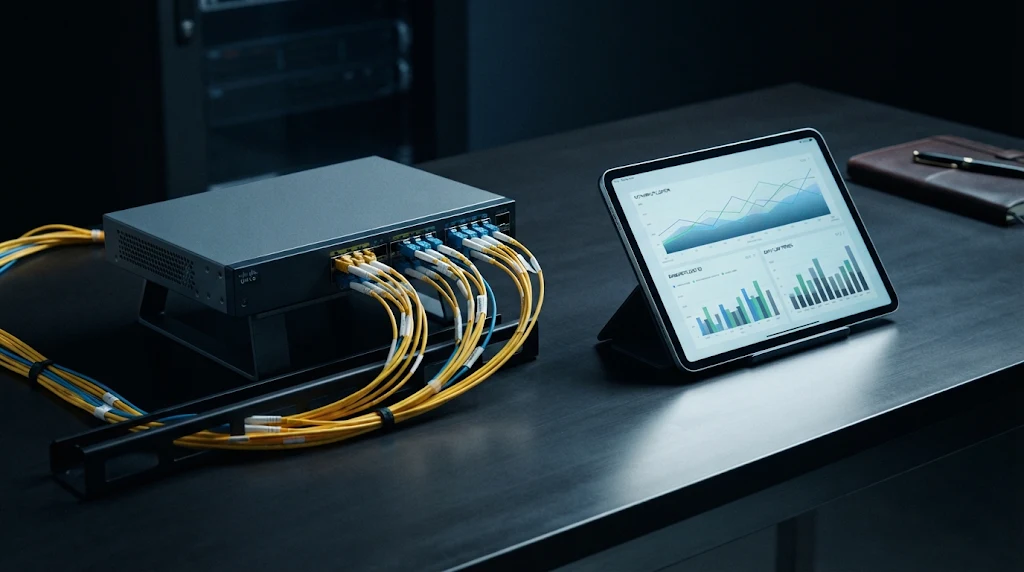
When auditing prospective billing platforms, telecom CIOs and VP-level network architects prioritize four non-negotiable technical capabilities:
1. Sub-Second Mediation and Usage Metering
A single 5G base station generates orders of magnitude more session events than 4G LTE infrastructure. Modern billing mediation engines must ingest, deduplicate, and enrich billions of Charging Data Records (CDRs) and IP Detail Records (IPDRs) daily without latency spikes that delay fraud detection or credit-limit cutoffs.
2. B2B2X and Multi-Party Revenue Sharing
Enterprise 5G deployments rarely involve a simple two-party subscriber relationship. Carriers monetizing smart factories, connected vehicles, or cloud gaming bundles require automated settlement engines capable of splitting a single transaction across connectivity providers, edge-cloud hosts, and third-party application developers in real time.
3. No-Code Product Catalogs
Hard-coded tariff tables force operators to wait months for vendor change requests before launching promotional bundles. Catalog-driven billing decouples commercial product definitions from underlying network charging rules, enabling commercial teams to configure tiered data caps, roaming passes, or enterprise SLAs in hours.
4. Automated Tax and Regulatory Compliance
In North America, telecommunications invoicing involves complex federal, state, and municipal surcharges—including Universal Service Fund (USF) contributions, E911 fees, and right-of-way taxes. Enterprise-grade billing suites integrate directly with specialized tax engines (such as Avalara Communications or SureTax) at the rating stage rather than treating tax calculation as a post-invoice patch.
Procurement Checklist: SaaS Overlay vs. Full-Stack Rip-and-Replace
Full-stack BSS replacements at Tier-1 operators historically carried high overrun risks, often stretching across 24 to 36 months. Consequently, most North American and European carriers now follow a two-speed BSS architecture:
- Retain Legacy Core for Consumer Postpaid: Keep stable, amortized legacy billing engines running for standard consumer voice and data plans where regulatory audit trails are already established.
- Deploy a Cloud-Native SaaS Overlay for Growth Segments: Route new 5G enterprise slices, MVNO wholesale contracts, fiber-to-the-home (FTTH) bundles, and IoT SIM fleets through an API-first cloud monetization layer such as Aria Systems, Cerillion, or Zuora.
Frequently Asked Questions (FAQ)
What is the difference between telecom billing software and a full BSS suite?
Telecom billing software specifically handles usage rating, invoice generation, payment processing, and tax calculation. A full Business Support System (BSS) encompasses billing alongside Customer Relationship Management (CRM), order management, product catalogs, and partner settlement workflows.
How much does enterprise telecom billing software cost?
Pricing depends on subscriber volume, transaction throughput, and deployment model. Cloud SaaS platforms for MVNOs and regional ISPs typically start between $5,000 and $25,000 per month plus a fraction-of-a-cent fee per rated event, whereas Tier-1 managed-service contracts with vendors like Amdocs or Netcracker run into tens of millions of dollars annually.
Why is real-time convergent charging critical for 5G monetization?
5G services rely on dynamic parameters—such as guaranteed low latency, uplink bandwidth, and network slice isolation—rather than flat monthly data buckets. Convergent charging monitors network consumption in real time, preventing revenue leakage and enabling instant balance notifications or automated bandwidth upgrades.
Which telecom billing software companies are best suited for MVNOs and regional ISPs?
MVNOs and mid-sized fiber operators generally avoid heavy Tier-1 suites in favor of modular, rapid-deployment platforms such as Cerillion, PortaOne, Aria Systems, or Optiva, which offer pre-integrated SIM provisioning, multi-tenant branding, and predictable SaaS licensing.