

The global telecommunication equipment industry is navigating a pronounced capital expenditure rotation in 2026 as Tier-1 mobile operators transition from peak 5G macro-radio rollouts toward targeted capacity upgrades, AI-native Radio Access Networks (AI-RAN), and optical transport infrastructure.
While broader enterprise and carrier network hardware estimates exceed $695 billion globally when factoring in consumer handsets and enterprise LAN gear, core carrier infrastructure spending—spanning Broadband Access, Microwave & Optical Transport, Mobile Core, and Radio Access Networks (RAN)—extended its positive growth momentum into 2026 following a 4% industry recovery in 2025, driven heavily by hyperscale cloud data center interconnect demand and Open RAN commercial deployments.
Top Telecommunication Equipment Vendors: 2026 Market Share & Positioning

Six primary equipment manufacturers control the vast majority of global carrier infrastructure spending, though geopolitical restrictions in North America and Europe have bifurcated Western and Asian supply chains.
| Equipment Vendor | Headquarters | Primary Infrastructure Segments | 2026 Strategic Focus & Carrier Traction |
|---|---|---|---|
| Huawei | Shenzhen, China | 5G RAN, Optical Transport, Core Network, Enterprise Routing | Maintains roughly 30% global carrier equipment share led by domestic Chinese 5G-A (5.5G) rollouts and emerging markets |
| Ericsson | Stockholm, Sweden | 5G RAN, Cloud Core, Open RAN-Ready Radios | Executing AT&T’s 5-year $14B Open RAN network modernization targeting 70% open-capable traffic by late 2026 |
| Nokia | Espoo, Finland | IP Routing, Optical Networks, 5G RAN, Private Wireless | Scaled optical networking and webscale data center reach following its $2.3B acquisition of Infinera |
| ZTE | Shenzhen, China | Wireless RAN, Fixed Access (PON), Core Infrastructure | Holds ~10%–11% global carrier equipment share with strong momentum in fiber-to-the-home (FTTH) optical line terminals |
| Cisco Systems | San Jose, USA | Carrier IP Routing, Optical Transport, Mobile Packet Core | Focused on Silicon One routing upgrades and AI backhaul networking for Tier-1 operators and hyperscalers |
| Samsung Networks | Suwon, South Korea | Virtualized RAN (vRAN), 5G Massive MIMO Radios | Key vRAN supplier for Verizon and Dish/Boost networks, expanding Open vRAN trials across Europe |
Three Hardware Trends Defining Telecom Infrastructure in 2026
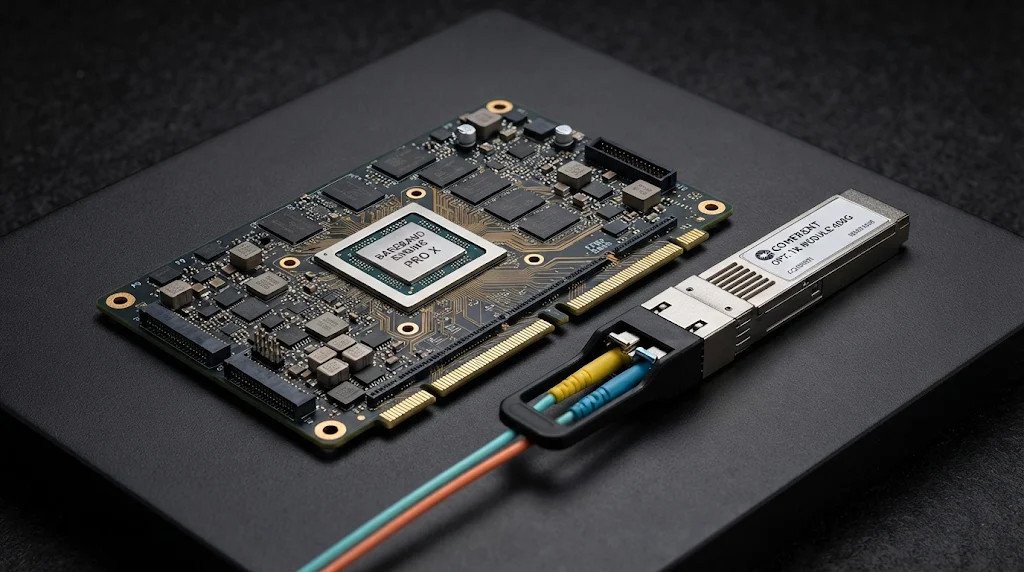
Across mobile tech and hardware supply chains, carrier procurement teams are concentrating capital budgets on three architectural shifts:
1. Commercialization of Open vRAN
Open Radio Access Networks decouple baseband software from proprietary radio hardware, enabling operators to run virtualized RAN workloads on commercial off-the-shelf (COTS) x86 and ARM servers. AT&T’s large-scale Open RAN deployment with Ericsson and Fujitsu—engineered to carry 70% of its wireless traffic across open-capable platforms by late 2026—has validated multi-vendor radio interoperability at national carrier scale.
2. AI-RAN and Edge Compute Integration
Radio equipment vendors are embedding neural processing accelerators directly into base station baseband units. By running AI-driven beamforming and dual-band radio sleep modes at the cell site, operators reduce RAN power consumption by up to 20%–25% while simultaneously accelerating enterprise adoption of localized 5G private network architecture across manufacturing and logistics campuses.
3. 800G and 1.6T Coherent Optical Transport
Backhaul networks connecting 5G cell sites to regional data centers are undergoing rapid optical upgrades. Following major optical consolidation—exemplified by Nokia’s integration of Infinera—carriers are deploying 800-gigabit coherent pluggable optics to prevent backhaul bottlenecks caused by fixed wireless access traffic and distributed AI workloads.
Frequently Asked Questions (FAQ)
Who are the largest telecommunication equipment companies in the world?
By global revenue across RAN, optical transport, and carrier routing, the largest telecommunication equipment manufacturers are Huawei, Ericsson, Nokia, ZTE, Cisco Systems, and Samsung Networks.
What is the difference between traditional RAN and Open vRAN?
Traditional RAN bundles proprietary radio units and baseband hardware from a single vendor using closed interfaces. Open vRAN virtualizes baseband processing onto standard cloud servers and uses open fronthaul interfaces, allowing operators to mix radio hardware and software vendors.
Why are telecom operators upgrading to 800G optical transport hardware?
Surging data traffic from 5G mid-band radios, residential Fixed Wireless Access (FWA), and AI data center interconnects requires higher fiber capacity between cell sites and core networks without laying new physical fiber cables.